
There are few things more satisfying on a warm spring day than fishing for your supper.
Dragonflies skim the water’s surface, last year’s reeds whisper in the breeze, and time slows to the steady rhythm of casting and waiting. It’s moments like these that make the old saying ring true: a bad day’s fishing is still better than a good day’s work.
That first pull on the line still sends the heart racing. Adrenaline spikes as the fish breaks the surface, scales flashing in the sunlight. There’s the long, careful fight, the measured draw of line, and finally the quiet mix of pride and respect as the fish is dispatched and set aside for the fire.
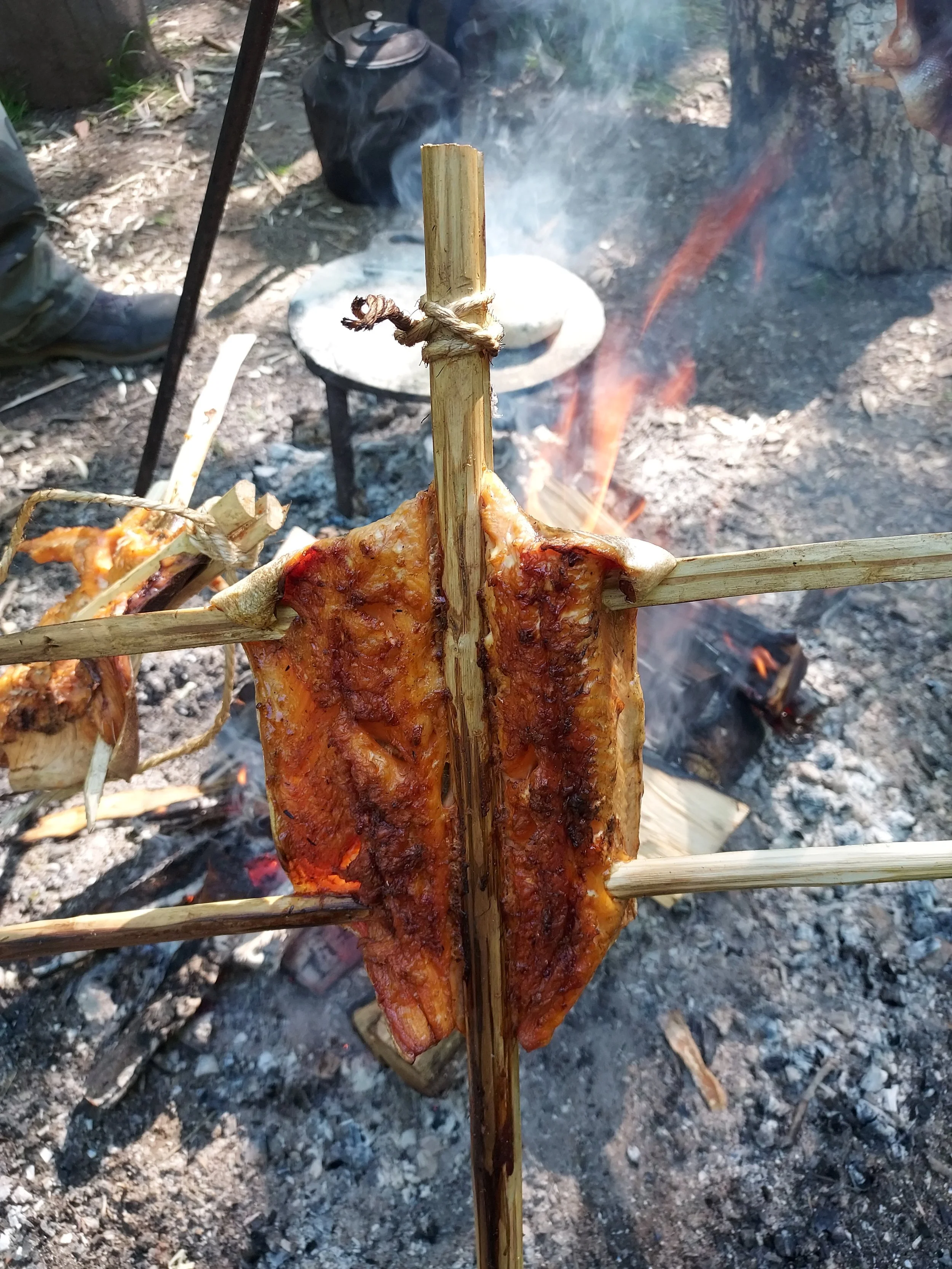
Catching Fish: Skill Over Certainty
In a true survival situation, rod-and-line fishing is often one of the least reliable ways to secure food. Historically, hunter-gatherers and poachers used a wide range of techniques — from trapping and spearing to far more questionable methods best left in the past.
It’s worth saying clearly: many of these techniques are illegal in the UK and elsewhere, and should only ever be learned in a legal, ethical training environment. That said, understanding alternative fishing methods — even theoretically — can be invaluable knowledge if circumstances ever become serious.
Dispatching and Preparing the Fish
Once caught, the fish should be killed quickly and humanely. A sharp blow just behind the head using a priest (a short, stout stick) is effective and respectful.
When the fish has stopped moving, gut it promptly:
Hold the fish belly-up, head pointing away from you.
Using a sharp knife, carefully cut from the anus up to just below the pectoral fins.
Scoop out the entrails with two fingers and pull firmly.
Dispose of the guts well away from camp — they spoil quickly and attract scavengers. Burning them in the fire is often the cleanest option.
Making a Proper Fish Spit
Cooking fish on a stick is one of the simplest and most reliable outdoor cooking methods — if it’s done properly.
Select green wood (freshly cut, living wood) such as hazel or willow. Avoid toxic species.
Cut a straight stick about 1 metre long, roughly the thickness of your middle finger.
Strip bark from the thinner end for around 30 cm.
Sharpen both ends.
Next, prepare two skewers:
Cut two sticks around 20 cm long and about 5 mm thick
Remove the bark — these will pin the fish in place and stop it spinning
Now split the thicker end of the main spit:
Press it against a log or firm surface
Use the knife tip to split it down the centre, but not all the way
Twist gently to open the split
If it splits too far, don’t worry — it can be tied later using bark or cordage.
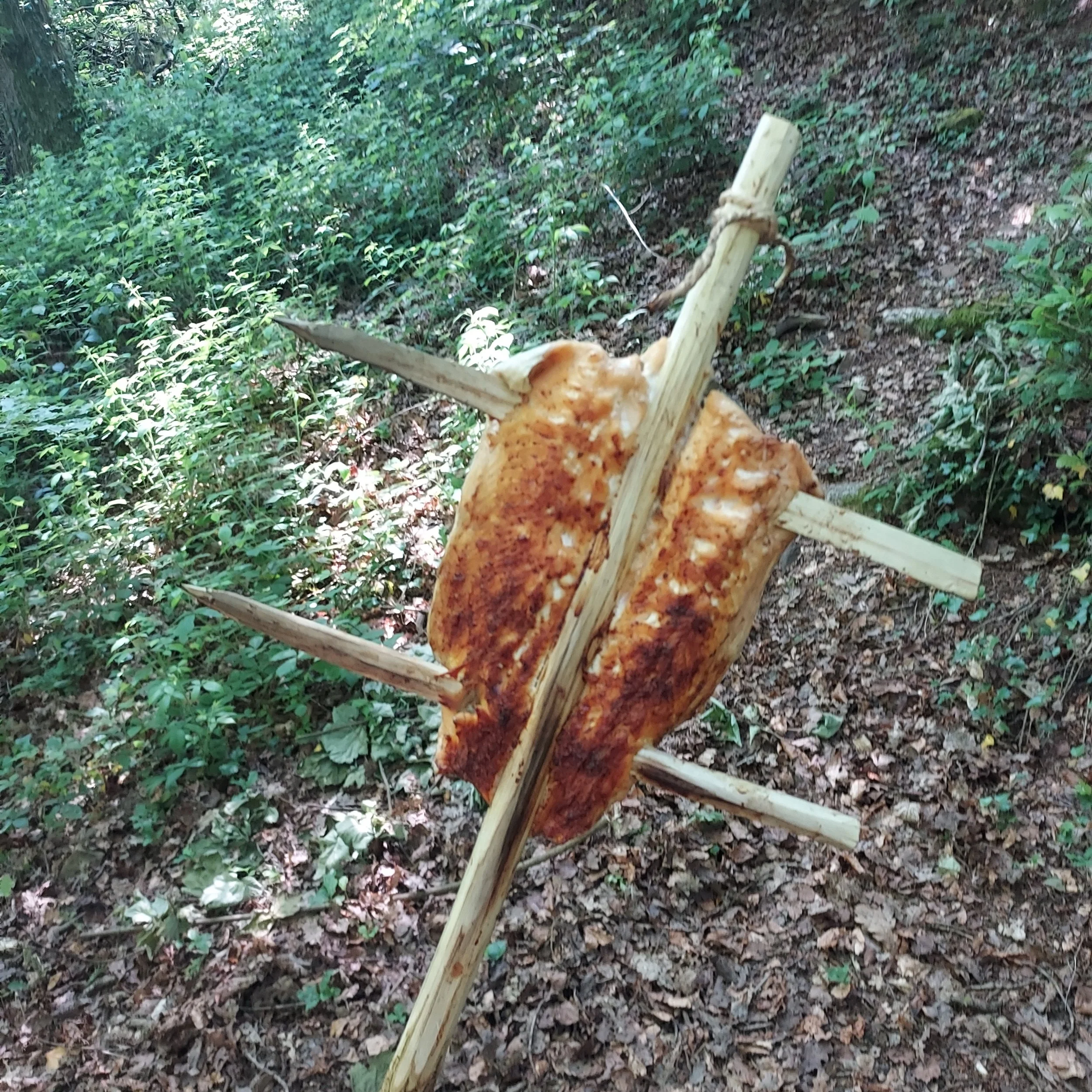
Securing the Fish (The Messy Bit)
Slide the spit into the body cavity and push it out through the mouth — not glamorous, but effective.
Line the split with the sides of the fish and push the first skewer:
Through one side of the fish
Through the split
Out the other side
Aim for the meatiest part to prevent tearing as it cooks. Insert the second skewer closer to the tail. Once secured, the fish should be firmly held. You can also tie the tail to the spit with bark or string for extra security.
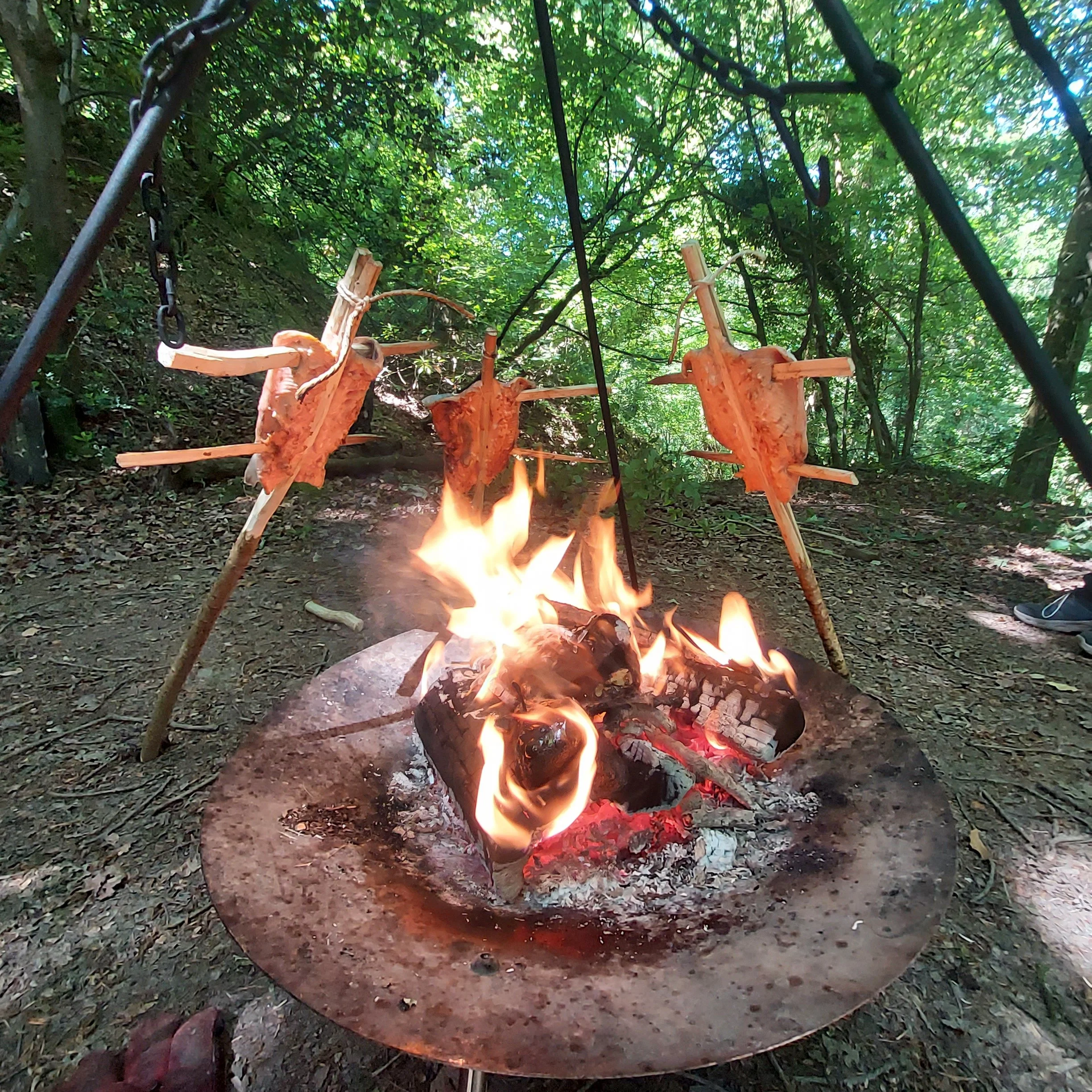
Cooking Over the Fire
Cook the fish over glowing embers, not flames. Turn it regularly to avoid burning. By planting the thick end of the spit into the ground at an angle, you can cook hands-free.
Enhance the flavour by stuffing the cavity with wild herbs such as:
Ramsons (wild garlic)
Fennel
Sorrel or pine needles (in moderation)
Secure the cavity with bark or natural cordage if needed.
Once cooked to your liking, remove the skewers and eat straight from the spit — simple, satisfying, and deeply human.
Why This Method Still Matters
Cooking fish (or small game) on a properly made spit is far more secure than simply jamming a stick through the body and hoping for the best. The same technique works for rabbits and other small animals and has been used across cultures for thousands of years.
It’s efficient, low-tech, and deeply rewarding — a reminder that some survival skills don’t age, they endure.
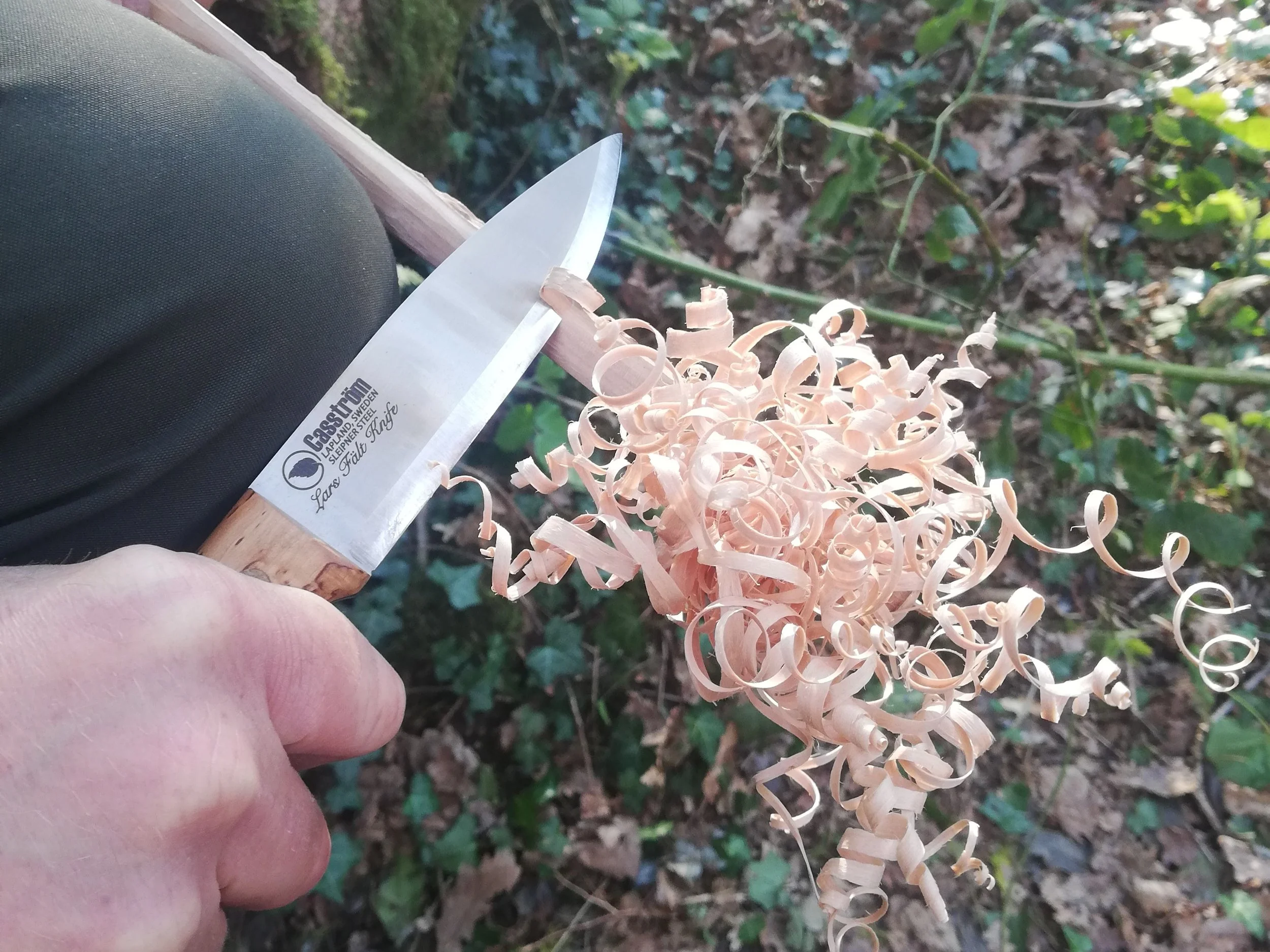
Casström Lars Fält Knife
To make the fish spit I used the Casström Lars Fält Knife.
Interested in kayak fishing?
Watch my YouTube video on catching a wild Sea Bass in a kayak.