
The Constant Battle Against the Cold
Maintaining a comfortable temperature outdoors is rarely straightforward. One moment you’re working up a sweat hauling firewood or climbing with a heavy pack. The next, you’re motionless in a hide watching wildlife.
Base layers are our first line of defence. They sit directly against the skin, so they must insulate while also transporting moisture away from the body. It’s a demanding job — but fortunately, nature solved it long ago.
Why Merino Wool Is Nature’s Performance Fabric
Merino wool is a remarkable natural material. Its uniquely crimped fibres — up to 40 creases per centimetre — trap warm air, creating exceptional insulation. At the same time, wool is both hydrophobic and hydrophilic, meaning it repels moisture yet can absorb up to 30% of its own weight in water without feeling damp.
It’s this balance that makes merino such an effective temperature regulator in extreme conditions.
Ethical Sourcing & A Stand Against Mulesing
Woolpower sources its wool from sheep grazing in Patagonia and Uruguay. Close relationships with farmers ensure the animals are well treated and that the wool is fully mulesing-free.
Mulesing — a controversial practice once common in Australian wool production — was a key reason Woolpower stopped importing Australian wool back in 2008. Their commitment to animal welfare is not marketing — it’s policy.
A Swedish Factory With Scandinavian Values
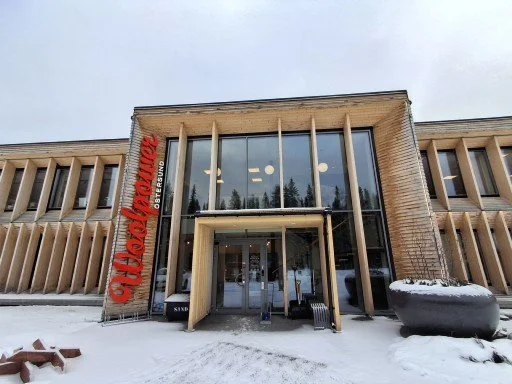
Founded in the early 1970s in Östersund, Northern Sweden, Woolpower initially produced garments for the Swedish military. From there, its reputation in the outdoor world steadily grew.
What sets Woolpower apart is its refusal to outsource production. Owners Daniel and Adam Branby remain committed to manufacturing in Sweden, even though labour costs are significantly higher. For the wages paid to one seamstress in Östersund, they could employ dozens elsewhere — but quality and integrity take precedence over margins.
Each garment is sewn start to finish by a single seamstress. When completed, she adds a label bearing her name — a personal seal of craftsmanship and pride.
Sustainability in Practice, Not Just Words
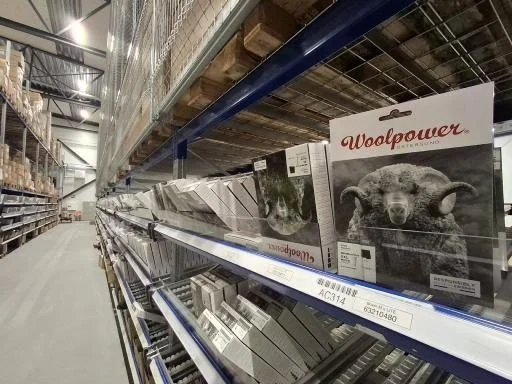
The current production facility, just two years old, brings almost the entire process under one roof — from yarn to finished product.
Environmental responsibility is central to the operation. The factory roof houses 2,200 solar panels, generating approximately 950,000 kWh annually — the equivalent of powering around 60 homes.
Short supply chains, renewable energy, and long-lasting garments form the backbone of their sustainability model.
The Ullfrotte Difference
What makes Woolpower truly unique is their Ullfrotte fabric.
Produced using circular knitting machines, garments are made with minimal seams — increasing comfort and durability. The fabric itself consists of 60% Merino wool blended with 40% synthetic fibres for resilience.
Inside, the fabric features a looped terry knit texture. Outside, it is smooth. This construction traps significant volumes of warm air — in fact, Ullfrotte garments are made up of roughly 80% air.
The result? Exceptional insulation and outstanding moisture management.
Layered for the Arctic
For the field test, Woolpower provided:
The 200 Base Layer
The 400 Mid Layer
Socks, neck tube, wrist covers
A classic beanie
The 200 fabric weighs 200g per square metre and is designed to sit directly against the skin as a moisture-wicking base layer. Available in various styles, it feels like a second skin and moves effortlessly with the body.
The 400 mid layer doubles the weight and insulation, designed to sit over the base layer for colder conditions. For even harsher climates, a 600-weight full-zip jacket is also available.
Over this, I added my own windproof shell.
Now it was time to test it properly.
Field Test One: Skiing in Vemdalen
A short drive from Östersund lies the ski resort of Vemdalen. Skiing provides the perfect thermal test — intense exertion followed by long, exposed chairlift rides.
With temperatures between -6°C and wind chill pushing down to -12°C, conditions were properly wintery.
On the descent, perspiration was inevitable. On the lift back up, exposure was constant. Yet throughout, I remained warm, dry and comfortable.
The layers performed exactly as promised.
Field Test Two: Skidoo & Ice Fishing
The following day introduced Skidoo riding across frozen lakes — effectively a motorbike on skis. High speeds and sub-zero air combine to create punishing wind chill.
Even so, wearing just the 200 and 400 layers beneath a windproof jacket, I felt perfectly insulated.
Later, standing still for over an hour ice fishing on Lake Oxsjon, core warmth remained steady despite inactivity. Only my hands felt the cold when gloves were briefly removed.
That, in my experience, is the true test of a layering system.
Before leaving the frozen lake, we gathered around a small cabin fire for a traditional Swedish fika — hot coffee and warm cinnamon rolls shared in good company.
It was the perfect end to a trip that combined craftsmanship, ethics and real-world performance.
Final Thoughts
In an age of disposable fashion and over-engineered synthetics, Woolpower represents something refreshingly different: durability, responsibility and honest performance.
After visiting the factory and testing the garments in authentic Scandinavian winter conditions, one thing is clear — these layers are built not just to perform, but to last.
For more information, visit: https://www.woolpower.uk/