
When I first became interested in learning wilderness survival skills as a youngster, there were very few practical woodcraft knives available here in the UK.
That didn’t stop me from spending my pocket money on a wide range of different knives — from impressive-looking Bowie knives with stag handles to an eclectic collection of mostly impractical blades. Eventually, I settled on a trusty Opinel No. 8 Stainless Steel Knife for many years.
The Opinel held a good edge and was easy to sharpen. However, the thin flat-ground blade and folding construction meant it was never strong enough to meet the full range of tasks expected of a true woodsman’s knife.
My search for the holy grail — “the perfect knife” — continued for many years before I discovered the Scandinavian grind.
The “Scandi grind” is best described as a partial flat grind that extends from the cutting edge to around 10mm up the blade. My first Scandi-bladed knife was an E. Johnsson Classic from Mora, Sweden. From that point on, most of my general-purpose bushcraft knives have been Scandi grinds.
Scandinavia has a long and respected tradition of woodcraft and tool making. It stands to reason that this region would have such a strong influence on knife design and bushcraft culture.
The Influence of Lars Fält
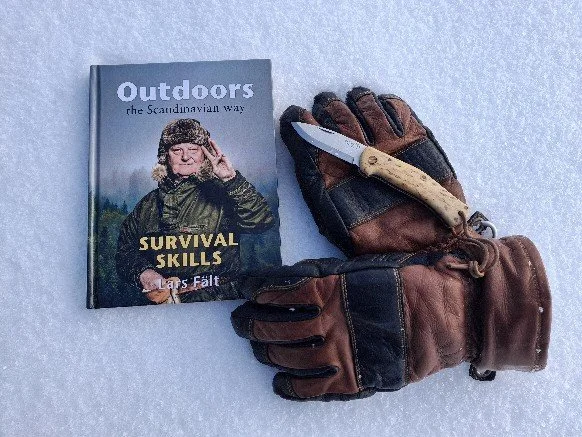
Another Scandinavian who has made a significant impact on the bushcraft scene is Swedish survival and Northern bushcraft expert Lars Fält.
Lars founded the Survival School of the Swedish Armed Forces in 1980 and went on to train generations of Swedish military personnel in survival techniques for the northern wilderness. His military career also included training with the SAS and other special forces units, as well as studying the outdoor skills of indigenous peoples around the world.
Since retiring from the military, Lars has dedicated his time to sharing the skills he accumulated over a lifetime through books and teaching.
The Casström Lars Fält Knife
More recently, I had the opportunity to test the Casström Lars Fält Knife, a knife born from a partnership between Casström and Lars Fält himself.
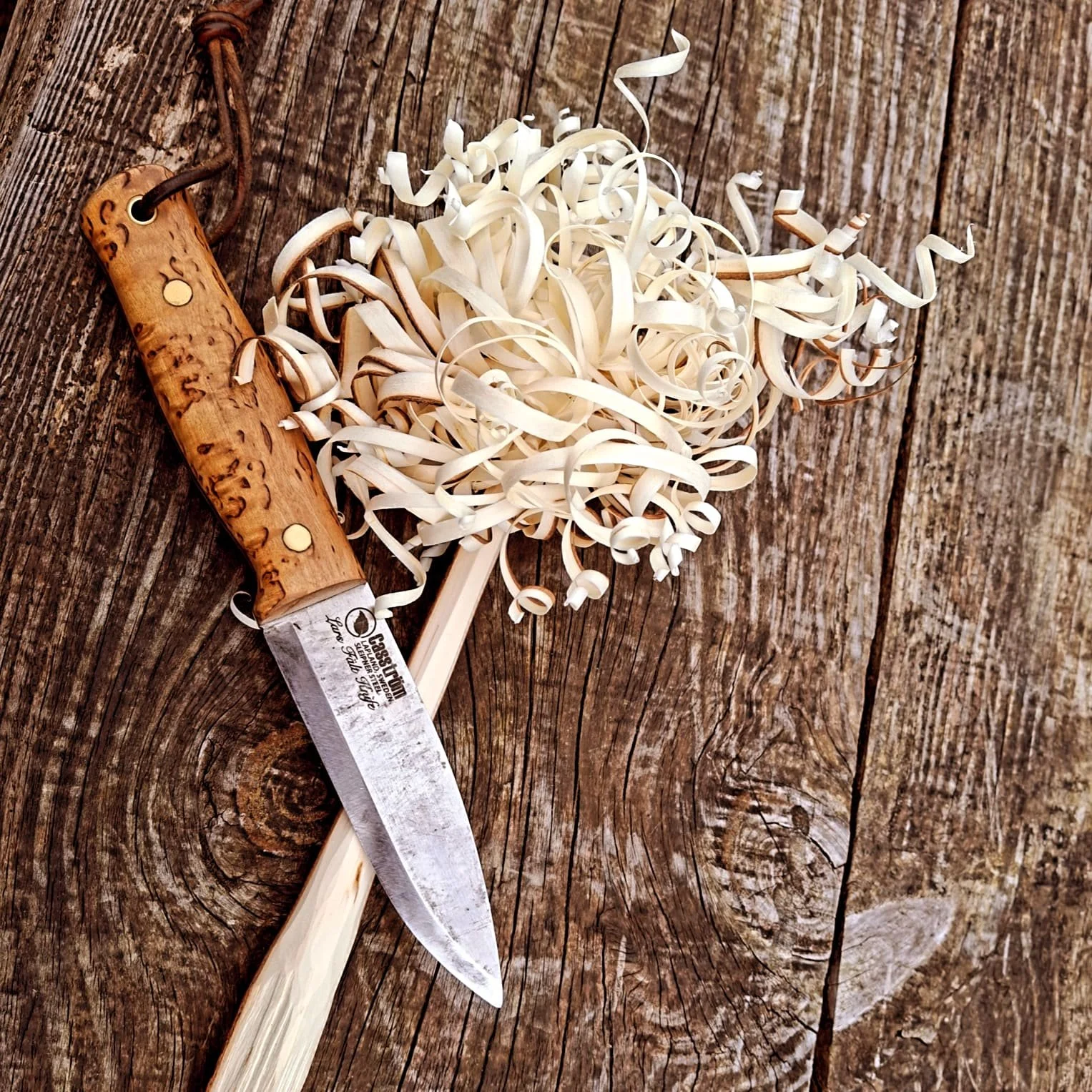
Upon opening the box, I was immediately struck by the stunning patterning of the curly birch handle scales. While synthetic handles may be practical, the natural beauty of wood wins me over every time. The vegetable-tanned cognac brown leather sheath is another traditional touch that appeals strongly to my nostalgic leanings.
Blade Design & Steel
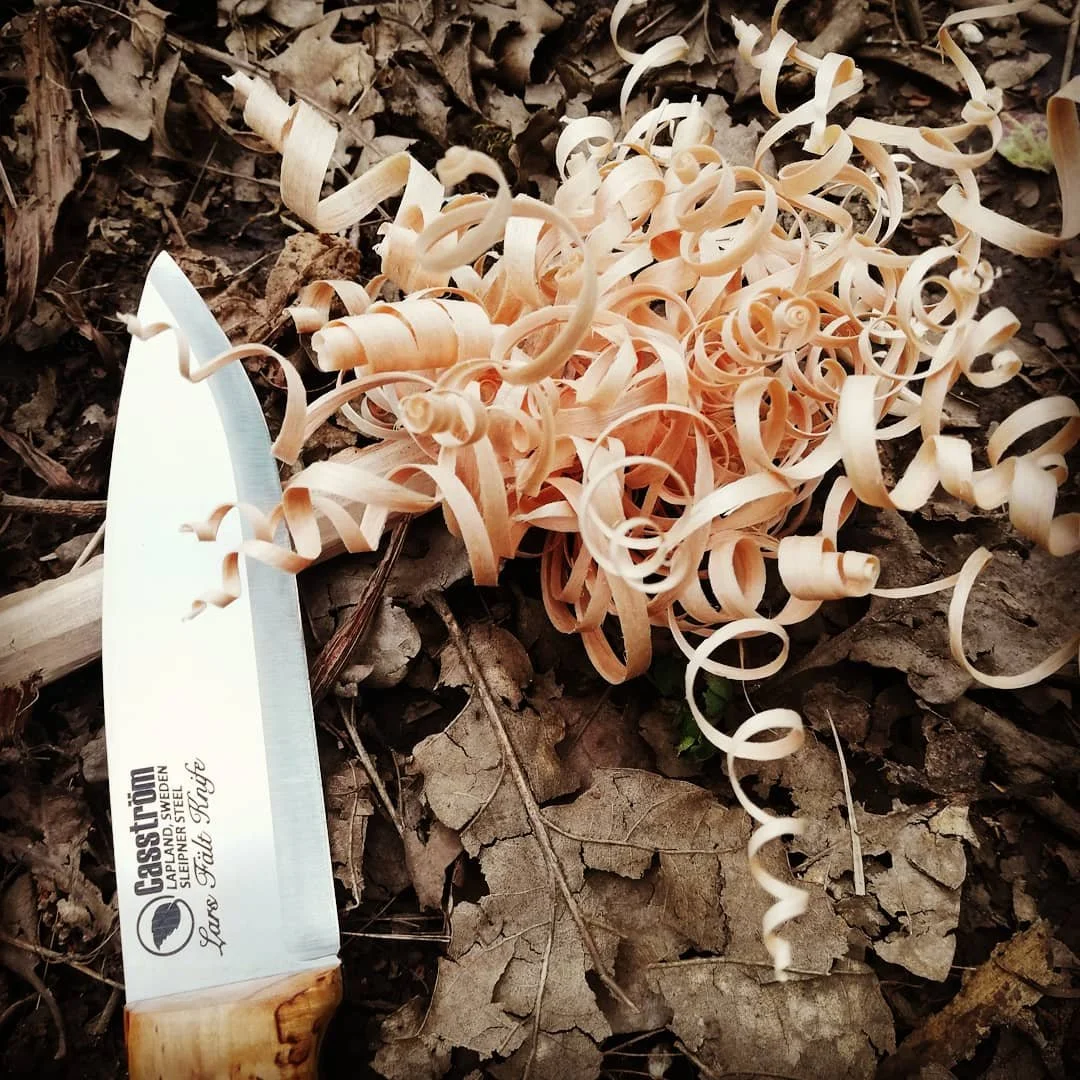
The blade features a classic drop-point design and is made from Sleipner alloy — a new-generation D2 tooling steel known for excellent edge retention and corrosion resistance.
The knife arrived shaving sharp and ready to go, so there was no need to spend time honing it before putting it through its paces.
Specifications
Blade length 11.5cm
Total length 23cm
Maximum blade thickness: Approx. 4mm
Steel: Uddeholm Sleipner
Rockwell hardness: 58–60 HRC
Weight: 175g
Handle: Carefully selected Curly Birch
Grind: Scandinavian
Construction: Full tang
Sheath: Vegetable-tanned cognac brown leather
Field Testing: Putting It to Work
The “Try” Stick
I began with a hazel “Try” stick — a traditional way to practice knife control by creating a series of notches and a point along a piece of green wood.
This kind of precision work is where the Scandi grind truly excels, and unsurprisingly, the Lars Fält knife handled the task effortlessly.
Feathersticks
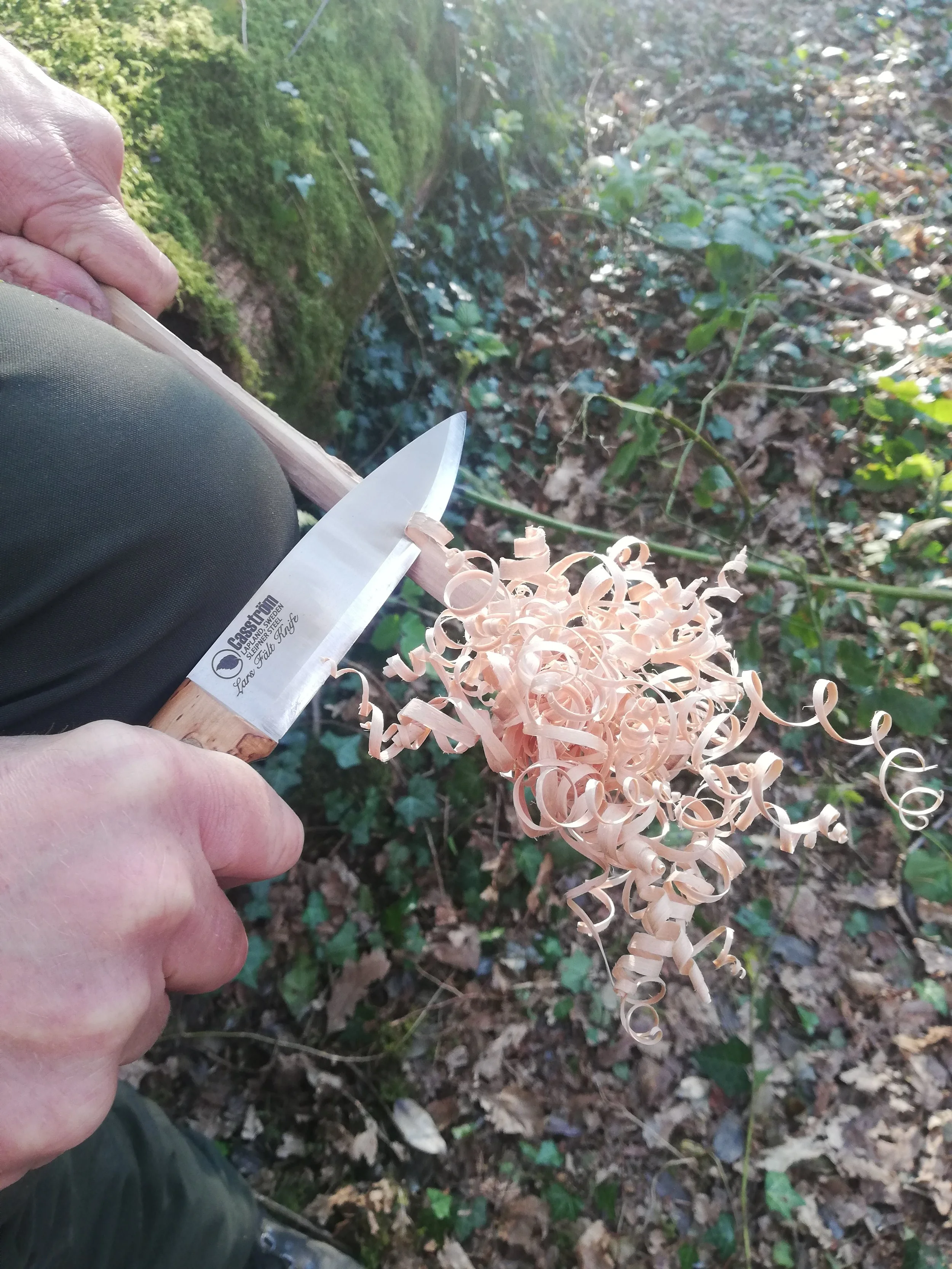
Next, I moved on to making a featherstick using seasoned willow — an essential skill for lighting fires in cold, damp conditions.
Using a knee-brace technique, I created fine, controlled shavings. The perfectly ground edge made producing delicate feathers almost effortless. Once again, the knife performed superbly.
Batoning
Finally, I tested the knife’s strength by splitting dry willow using a batoning technique.
This method has become somewhat controversial. Some argue that you should never use a knife in place of an axe. While an axe would undoubtedly be more efficient, if you ever find yourself with only a knife, you want to know it can withstand the task.
This is where the full-tang construction comes into its own. The handle scales are riveted onto a tang that extends the full length of the knife — without doubt the strongest method of constructing a general-purpose bushcraft knife.
The knife passed this test with complete confidence.
Final Thoughts (For Now)
While I’ve been thoroughly impressed by the knife’s performance during this initial series of tests, the real measure of any bushcraft tool is long-term reliability.
I will continue using and reviewing this knife over the coming months and will also be featuring it in a future YouTube video.
Watch this space.